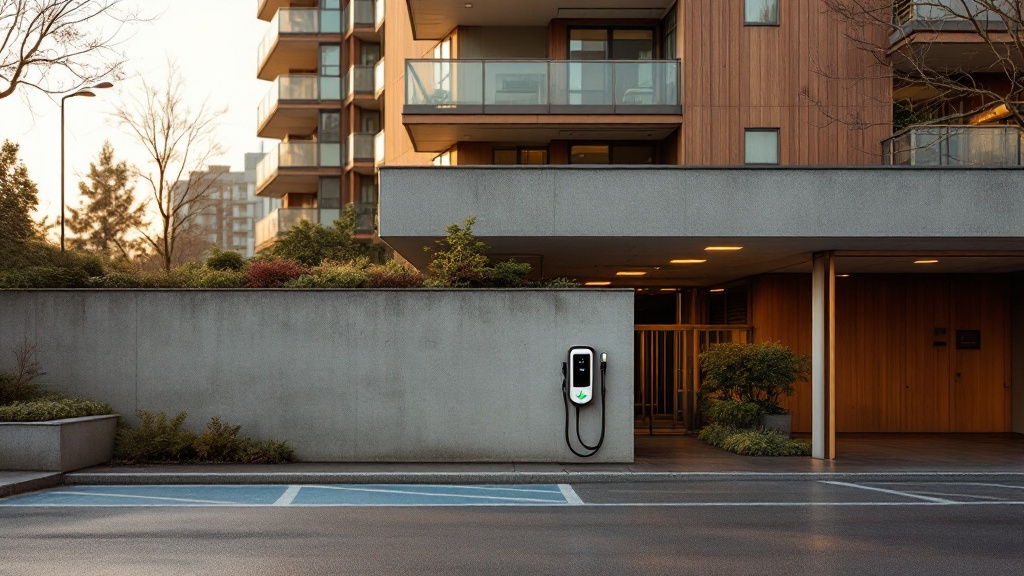
A request for a stall charger used to land at the bottom of the council agenda. It now lands near the top, because the Strata Property Act amendments enacted through Bill 22 (2023) changed how stratas plan for charging. The Province’s electric vehicle charging in strata corporations page lays out the basics, but the operational details — who pays for what, in what order, on which timeline — are still where most councils stall.
Without the report, a refusal is harder to defend. With the report, the next steps usually pay for themselves.
What the 2023 amendments actually changed
The amendments did three things stratas need to take seriously:
- The electrical planning report became mandatory. Strata corporations with five or more strata lots must obtain a report from a qualified electrical professional describing how the building’s electrical capacity supports current and future EV charging. The Province’s electrical planning report guidance sets the deadlines: December 31, 2026 for most of the province, December 31, 2028 for designated regions.
- Some decisions now pass by majority vote. Certain EV infrastructure decisions tied to common property and CRF spending no longer require a 3/4 vote at a general meeting. Owner requests to install a personal charger still follow the statutory approval process and cannot be unreasonably refused.
- Refusal needs an evidence base. A council that refuses a charger application without the planning report or a documented technical reason exposes the strata to a Civil Resolution Tribunal claim it is unlikely to win.
The legislative intent here is to remove the bottleneck that councils have been, without putting unfunded electrical upgrades on the strata’s books overnight.
The electrical planning report — what it covers
A qualified electrician or electrical engineer walks the building, reads the service panel, and writes a report covering existing capacity, headroom for new charging circuits, a recommended infrastructure path, and cost estimates for the next two phases. The same firm can also lay out a phased approach so the first dollars spent are the dollars that unblock the most owners.
Budget $3,500 to $8,000 for the report itself in Metro Vancouver. Buildings over 100 units or with complicated service layouts (older West End towers, mixed-use podiums) push higher. The number that matters more than the report fee is the recommended infrastructure spend. That figure feeds the depreciation report and the next CRF discussion.
How a council runs the process
The sequence below is the one that works in practice. Skipping steps invites either a CRT complaint or a contractor markup.
- Owner survey first. Before commissioning the report, ask owners a single question: do you currently own, or plan to acquire within 24 months, a battery-electric or plug-in hybrid vehicle? The answer shapes the report’s sizing assumptions. A building where 35% of owners say yes needs a different design than one where 8% do.
- Issue a scoped RFP for the report. Three quotes from licensed electricians or electrical engineering firms. Keep the scope to the planning report itself — separate that procurement from any installation procurement so the firm writing the report isn’t also bidding to build what it recommends.
- Present the report at a general meeting. Owners need to see the numbers because they will be voting on whatever phase-1 spending the report triggers.
- Vote the phase-1 budget. Usually a shared load-management panel, base conduit, and metering hardware. Owners pay individual stall installation separately, on their own application.
- Publish the application process. A one-page document covering how an owner requests a charger, the form, the deposit, the contractor approval requirement, and the metering and billing mechanism. The published process is what insulates the council from “you said yes to her, why not me” complaints.
The four money lines you cannot avoid
Every council asks the same questions in a different order. The four numbers below are the ones that actually drive the budget vote.
| Line item | Typical Metro Vancouver range | Who pays |
|---|---|---|
| Electrical planning report | $3,500 – $8,000 | Strata (operating or CRF) |
| Phase-1 base infrastructure (load mgmt + conduit) | $25,000 – $90,000 | Strata (CRF or special levy) |
| Service upgrade if required | $80,000 – $250,000+ | Strata (special levy) |
| Individual stall charger (Level 2) | $2,500 – $6,500 installed | Owner |
The middle two lines are the ones that surprise councils. A 60-unit wood-frame building with adequate service can do phase-1 for under $40,000 and never need a service upgrade. A 1990s tower with elevators on the original service can need a $200,000 upgrade before any stall can be energized. The report tells you which building you have.
The report is the cheapest line in this table. It is also the line that decides every line below it.
Funding sources to check before the budget vote
Several BC and federal programs offset costs. Verify the current rebate amounts and intake windows before citing them in a council package — these change.
- BC Hydro’s EV Ready rebates for apartment and condo buildings — up to $3,000 for an EV Ready plan and up to $80,000 for infrastructure per qualifying building, subject to program rules and approval order.
- CleanBC’s Go Electric program — covers a portion of charger hardware and installation in qualifying buildings.
- Natural Resources Canada’s Zero Emission Vehicle Infrastructure Program (ZEVIP) — federal funding for charging infrastructure. Intake windows and eligible recipients change by program cycle; check the current NRCan page.
A council that applies for the BC Hydro rebate before commissioning the report can often have the plan rebate fold into the infrastructure rebate envelope. Applying in the wrong order leaves money on the table.
What goes wrong
Two failure modes show up repeatedly in CHOA bulletins and CRT decisions:
- The council refuses an application without the planning report. The owner applies to the CRT, the tribunal asks for the report, the strata can’t produce one. Filing fees and partial legal costs follow. The fix is to commission the report before any application reaches the council, not after.
- The firm writing the report bids on the installation. A soft conflict, but a real one. The report recommends the most expensive option, the same firm wins the install, and owners feel sandbagged. Scope the report procurement separately.
If your existing manager is the one telling you “we’ll get to it next year,” that’s a signal worth checking. A capable manager has a working relationship with at least one BCFSA-licensed strata management firm’s preferred electrical contractor list and can produce the RFP scope in a week. If yours can’t, run the council through our 10-point performance scorecard and see where else the gap sits.
The receipt — what to bring to your next council meeting
| Question | Why it matters |
|---|---|
| Do we have a current electrical planning report on file? | The 2026 and 2028 deadlines apply to most stratas with five or more lots. |
| When did we last survey owners on EV intent? | Survey data older than 24 months is stale. |
| Has the manager produced an RFP scope for the report? | If no, escalate. If they don’t know what’s in scope, escalate twice. |
| Have we checked the BC Hydro EV Ready rebate window? | Funding is finite. Apply in the order the program requires. |
| Is the report-writer also bidding on installation? | They shouldn’t be. Re-scope the procurement. |
| Does the depreciation report reflect EV infrastructure costs? | If not, the next CRF projection is wrong. |
The councils that get this right run the same sequence every time: survey, report, owner meeting, phase-1 vote, application process. The councils that improvise spend more money for worse results.
For the broader CRF context — what should already be funded versus what’s being added to the next budget cycle — see our depreciation report primer. For benchmarks on what your management firm should be charging to coordinate project work like this, see the Metro Vancouver fee benchmarks for 2026. For background reading on the underlying statute, CHOA’s legislative updates page is the best plain-English summary outside the Province’s own materials.